
If you have been struggling with persistent low back stiffness or a nagging “pinch” in your hip that refuses to clear up with traditional stretching, the culprit may not be your spine or your hip joint at all. For many adults in the Westerville area, chronic musculoskeletal pain is often a secondary symptom of a pelvic floor that has forgotten how to relax or coordinate with the rest of the body.
The “Cannister” Effect: Why Your Core Is a Pressure System
To understand why your hip hurts, we have to look at your torso as a pressurized “canister.” The top of this canister is your respiratory diaphragm (the muscle that drives your breathing), and the bottom is your pelvic diaphragm, better known as the pelvic floor.
In a healthy system, these two diaphragms move in perfect tandem. When you inhale, both diaphragms should descend, allowing the pelvic floor to lengthen and accept pressure. When you exhale, they both lift. This management of intra-abdominal pressure is what stabilizes your spine and allows your hips to move freely.
However, when we hold onto stress or develop poor breathing habits, the pelvic floor often begins to hold onto excessive tension. If the bottom of that “canister” is rigid and locked, the pressure has nowhere to go. This mechanical “gridlock” forces the muscles of the low back and hips to overwork to provide stability, leading to the very pain that brought you into the clinic.
Why Tension Isn’t Strength
A common myth is that a “tight” pelvic floor is a “strong” one. In reality, a muscle that cannot relax is a weak and dysfunctional one. If your pelvic floor is constantly “on,” it loses its ability to react to movement. This lack of adaptability is a frequent driver of sacroiliac (SI) joint instability and hip impingement symptoms.
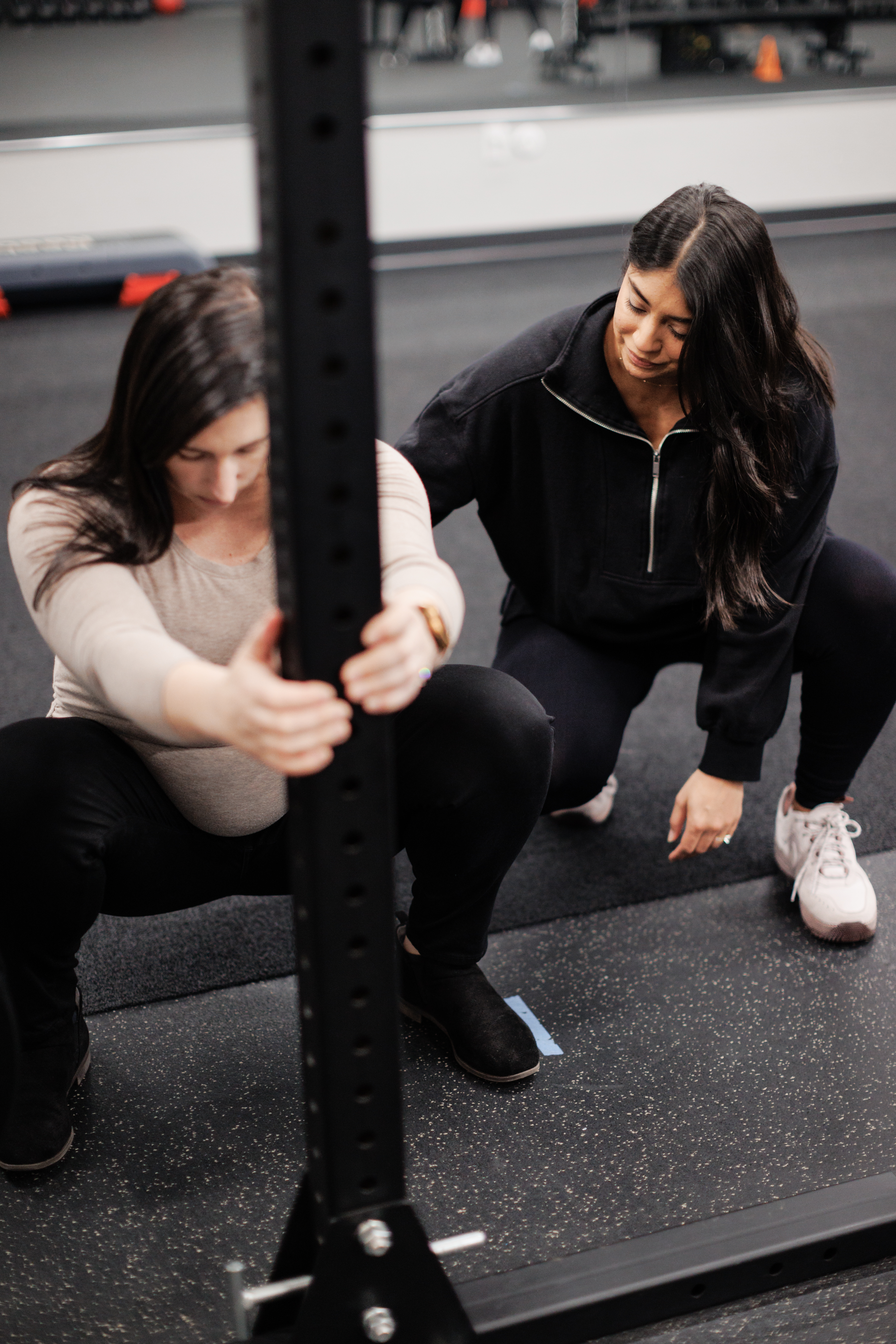
The COSJ 3-Phase Process
We address these complex layers by following a data-driven framework designed to move you from irritation to independence.
1. REPAIR: Calm the System
In this phase, we use conservative care to reduce the “threat” response in your nervous system. For back and hip cases involving pelvic floor tension, this may include gentle chiropractic adjustments and soft tissue work. We don’t just “fix” a spot; we use these tools to create a window of relief so your body feels safe enough to learn new movement patterns.
2. RETRAIN: Fix the Movement
This is where we address the “canister” mechanics. We focus on retraining your breathing to ensure the respiratory and pelvic diaphragms are communicating. By teaching you how to coordinate intra-abdominal pressure, we offload the overworked hip and back muscles. We prioritize functional diagnosis over structural labels—looking at how you move, not just where you hurt.
3. REINFORCE: Build Durability
Once your system is moving efficiently, we build “insurance” for your joints. Through expert-led training and progressive loading, we ensure your core and hips are strong enough to handle the demands of your daily life. Strength is the ultimate goal because a strong body is a resilient body.
Moving at Your Pace
My priority is to ensure you feel heard and empowered. Whether you are navigating postpartum recovery or simply dealing with the physical stressors of a busy professional life, we look at the whole person, not just a localized pain point. Healing isn’t linear, but with the right clinical logic, it is achievable.
If you are tired of chasing symptoms and want to understand the root cause of your hip or back pain, we are here to help you regain your functional independence.
See it in action: For a deeper look at how we utilize this 3-phase process to get you better results, you can watch our breakdown video here: The COSJ 3-Phase Process
Warmly,
Dr. Nisha Copeland
Medical Disclaimer: This content is for educational purposes only and not a substitute for professional medical advice. Always consult your physician regarding any medical condition or treatment plan.
Recent Comments