
Osteoarthritis (OA) is often described as “wear and tear,” but that explanation is incomplete and, more importantly, misleading.
Osteoarthritis is a whole-joint disease involving cartilage, bone, synovium, ligaments, and muscle. It is influenced not only by age and genetics but also by modifiable lifestyle factors that affect joint loading, inflammation, and movement quality.
The encouraging reality is this:
While we cannot reverse osteoarthritis, research consistently shows that we can slow its progression, reduce symptoms, and maintain a high level of function with the right strategies.
Here are five of the most important, evidence-based ways to do exactly that.
1. Manage Body Weight to Reduce Joint Load and Inflammation
Obesity is the single most significant modifiable risk factor for osteoarthritis.
Overweight and obesity account for approximately:
-
61 percent of hip OA hospitalizations
-
A substantial proportion of knee OA cases
-
25 percent of new knee osteoarthritis cases
This is not only a mechanical issue.
Excess adipose tissue is metabolically active and contributes to:
-
Chronic low-grade inflammation
-
Increased cytokine activity
-
Accelerated cartilage breakdown
That means weight gain worsens OA through both load and biochemistry. Even modest weight loss has been shown to:
-
Reduce joint pain
-
Improve function
-
Decrease compressive forces across the knee and hip
For every pound of weight lost, the knee experiences roughly four pounds less compressive force per step during daily activity.
Clinical takeaway: Weight management is not about appearance. It is a primary joint preservation strategy.
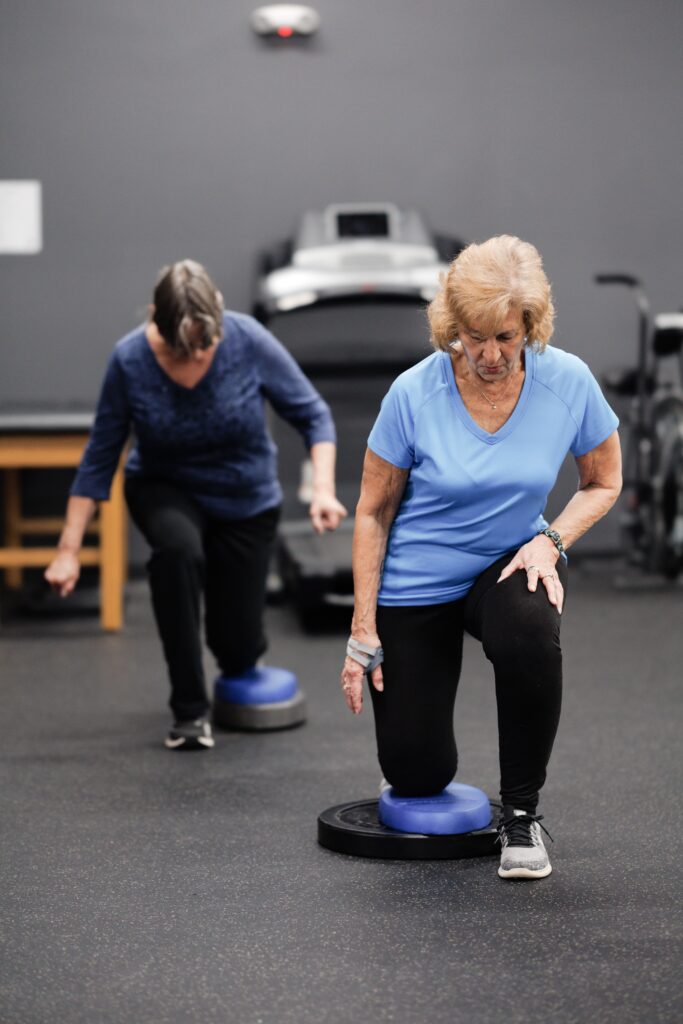
2. Strength Train to Improve Joint Stability and Load Distribution
Many people with osteoarthritis avoid exercise because they believe movement will “wear the joint out.”
The evidence shows the opposite.
Sedentary behavior is associated with:
-
Greater disability
-
Poorer function
-
Faster progression
Fewer than 11 percent of individuals with knee OA meet recommended activity levels, yet those who spend more time in even light-intensity activity demonstrate less disability.
Strength training improves:
-
Shock absorption
-
Neuromuscular control
-
Joint alignment
-
Force distribution across the joint
This reduces focal cartilage stress and improves long-term joint tolerance.
Key point: Moderate recreational physical activity does not increase OA risk and is strongly associated with better outcomes.
3. Protect Joints After Injury and Take Rehabilitation Seriously
A previous joint injury changes the mechanical environment of the joint.
Prior knee injury is associated with:
-
2.83 times higher odds of developing knee osteoarthritis
Meniscus and ligament injuries are especially linked to future OA.
These injuries often lead to:
-
Altered joint mechanics
-
Muscle inhibition
-
Loss of movement variability
-
Increased focal joint loading
Without proper rehabilitation, these changes persist for years.
Clinical takeaway:
Rehabilitation is not just about getting out of pain.
It is about restoring:
-
Strength
-
Symmetry
-
Motor control
-
Load tolerance
This is one of the most powerful ways to slow degeneration.
4. Modify Repetitive and High-Load Occupational Stress
Osteoarthritis is strongly associated with cumulative joint loading over time.
Risk increases with:
-
Frequent heavy lifting
-
Repetitive joint use
-
Kneeling and squatting
-
Prolonged standing on hard surfaces
-
High daily physical workload
There is a clear dose–response relationship between cumulative physical workload and knee OA severe enough to require hospitalization.
This does not mean you need to stop working or stop being active.
It means you need to improve:
-
Movement strategy
-
Load management
-
Recovery capacity
-
Strength relative to task demand
The goal is not to remove load.
The goal is to make the body more capable of handling it.
5. Be Strategic with Impact Activity, Not Fearful of It
High-impact collision sports such as football and hockey are associated with increased OA risk, largely due to injury rates.
However, this is very different from:
-
Recreational running
-
Hiking
-
Resistance training
-
Low-impact conditioning
Moderate recreational activity has not been shown to increase the risk of developing symptomatic knee OA, even at long-term follow-up.
Avoiding all impact leads to:
-
Loss of bone density
-
Reduced muscle mass
-
Lower tendon stiffness
-
Decreased joint resilience
The solution is graded exposure, not complete avoidance.
The Big Picture: Osteoarthritis Is a Load Management Problem
Osteoarthritis progression is influenced by the relationship between:
Applied load and tissue capacity
We cannot eliminate load from life.
But we can increase the body’s ability to tolerate it through:
-
Weight management
-
Progressive strength training
-
Movement optimization
-
Smart activity selection
-
Proper rehabilitation after injury
That is how we keep people active, independent, and doing the things they enjoy for decades.
Final Thoughts
The most important shift in managing osteoarthritis is moving from a passive mindset to an active one.
The question is no longer:
“What is wearing out?”
The real question is:
“How do we make this joint stronger, more supported, and better able to handle the demands of life?”
Because when we do that, we do not just reduce pain.
We preserve function.
We preserve independence.
We preserve quality of life.
References
-
Department of Veterans Affairs. The Non-Surgical Management of Hip & Knee Osteoarthritis (OA). 2020.
-
Kloppenburg M, Namane M, Cicuttini F. Osteoarthritis. The Lancet. 2025.
-
Kontio T, Heliövaara M, Viikari-Juntura E, Solovieva S. To What Extent Is Severe Osteoarthritis Preventable? Rheumatology. 2020.
-
Duong V, Oo WM, Ding C, Culvenor AG, Hunter DJ. Evaluation and Treatment of Knee Pain: A Review. JAMA. 2023.
-
Sharma L. Osteoarthritis of the Knee. New England Journal of Medicine. 2021.
Recent Comments